


Workload Management In the Customer Service
Intelligent Job Management for Maximum Productivity
Intelligently route each customer request to the right employee to ensure SLAs are met, teams are less burdened, and customers are satisfied.








What is Workload Management?
All Requests,
One System
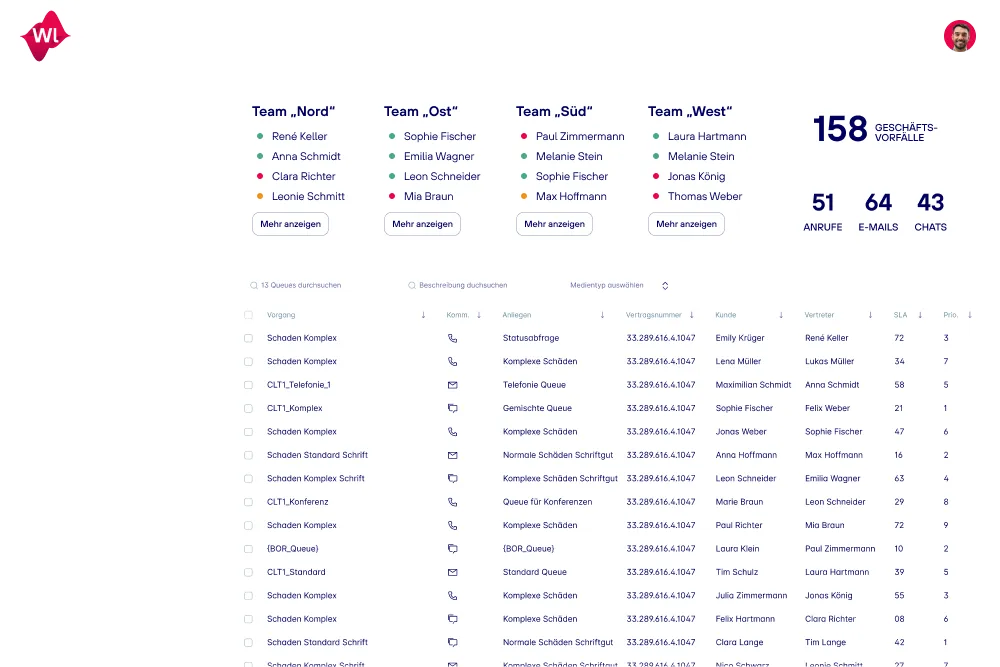
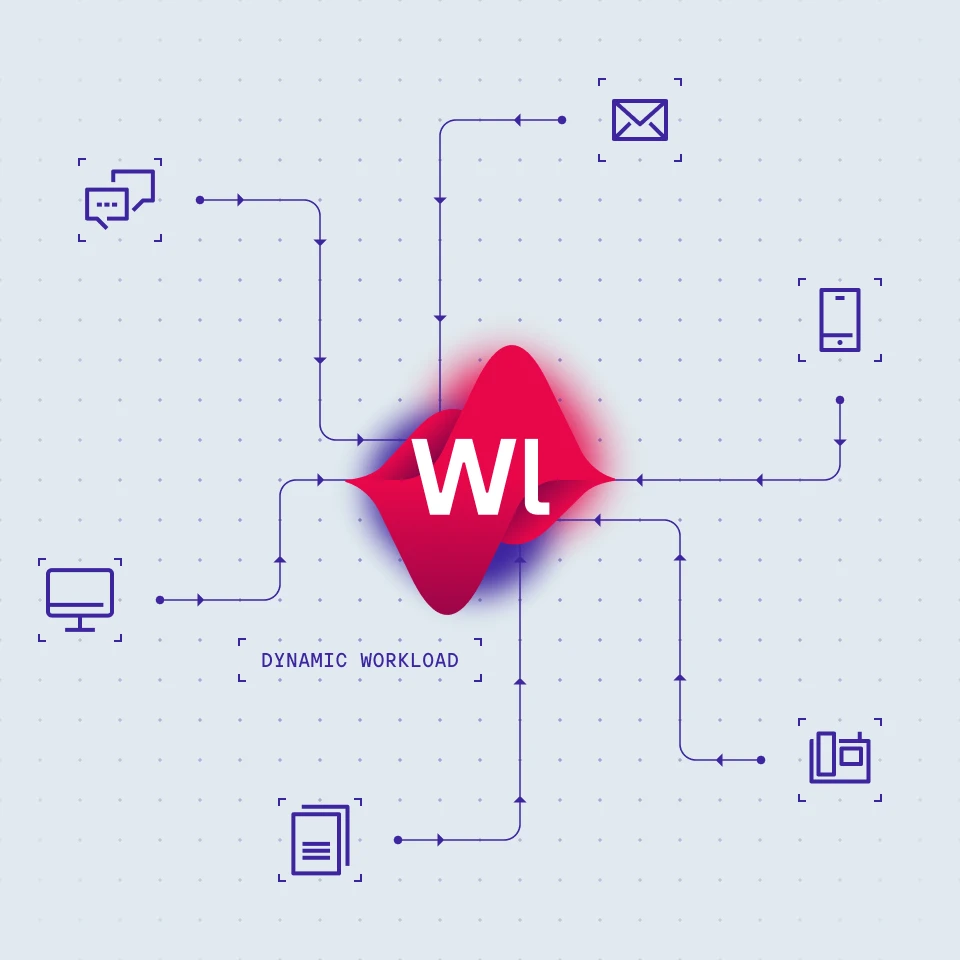
Workload management is the centralized control of all incoming customer requests in a service organization, from capture to resolution. To this end, Dynamic Workload consolidates all communication channels into a single system, continuously prioritizes each task based on urgency, and automatically assigns it to the appropriate, available employee. A dedicated contact person oversees multi-step processes from start to finish. This is particularly relevant for service organizations with high volumes of inquiries across multiple channels and clear SLA requirements, such as insurance companies or public sector clients.
The benefits are immediately apparent in day-to-day operations: SLAs are reliably met, the backlog does not continue to grow, and team capacity is utilized evenly. Unlike traditional ticket routing, which typically forwards tickets only based on the incoming channel or order of receipt, Workload Management takes an organization’s entire workload into account simultaneously.
SLA Compliance Through Real-Time Prioritization
The Most Important Thing First
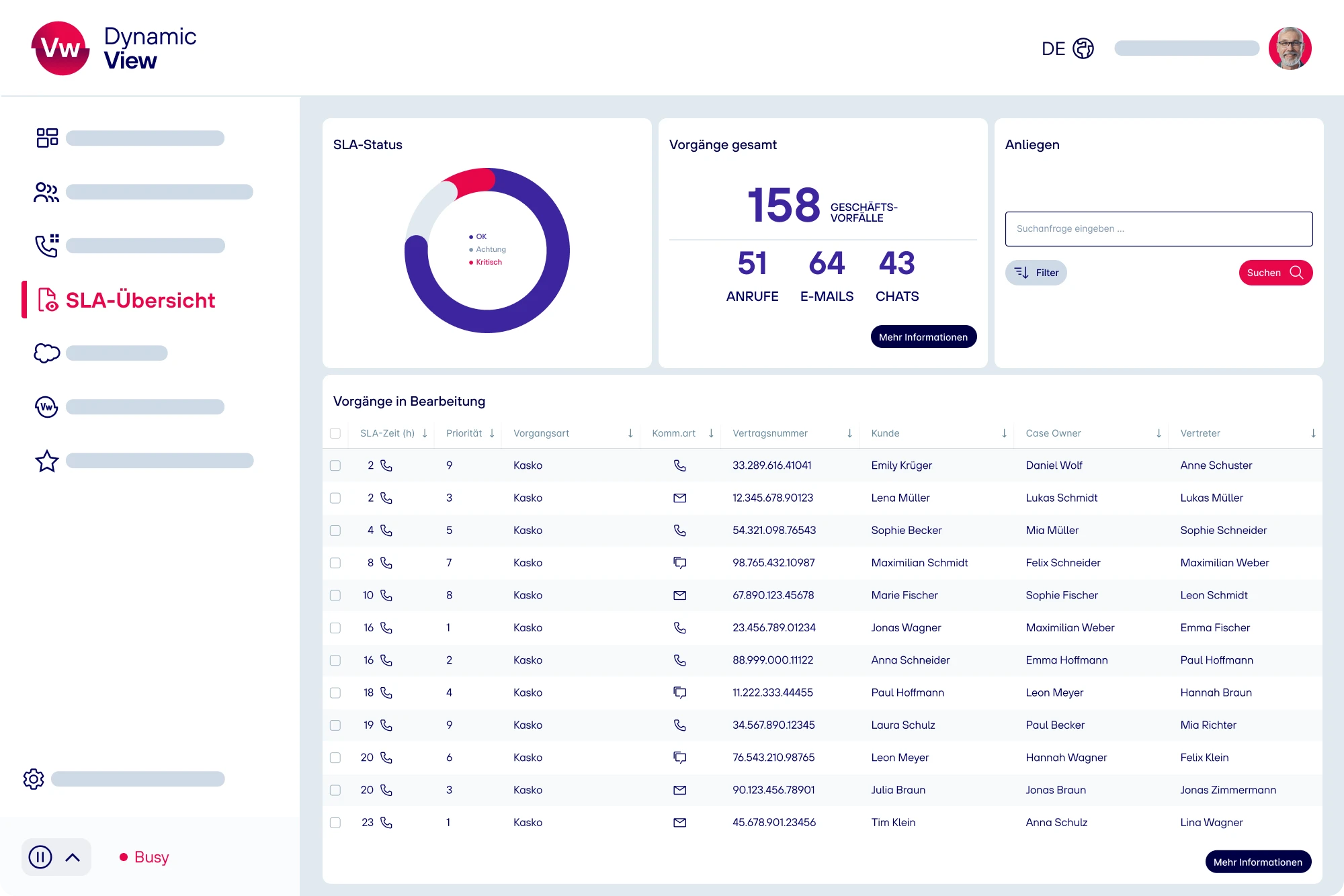
All customer requests are prioritized and reprioritized in real time. Thanks to this intelligent management system, your teams always handle the tasks that are most important at any given moment. This allows you to reliably meet your SLAs—even when request volumes fluctuate.
Intelligent Task Distribution
Always With The Right Employee
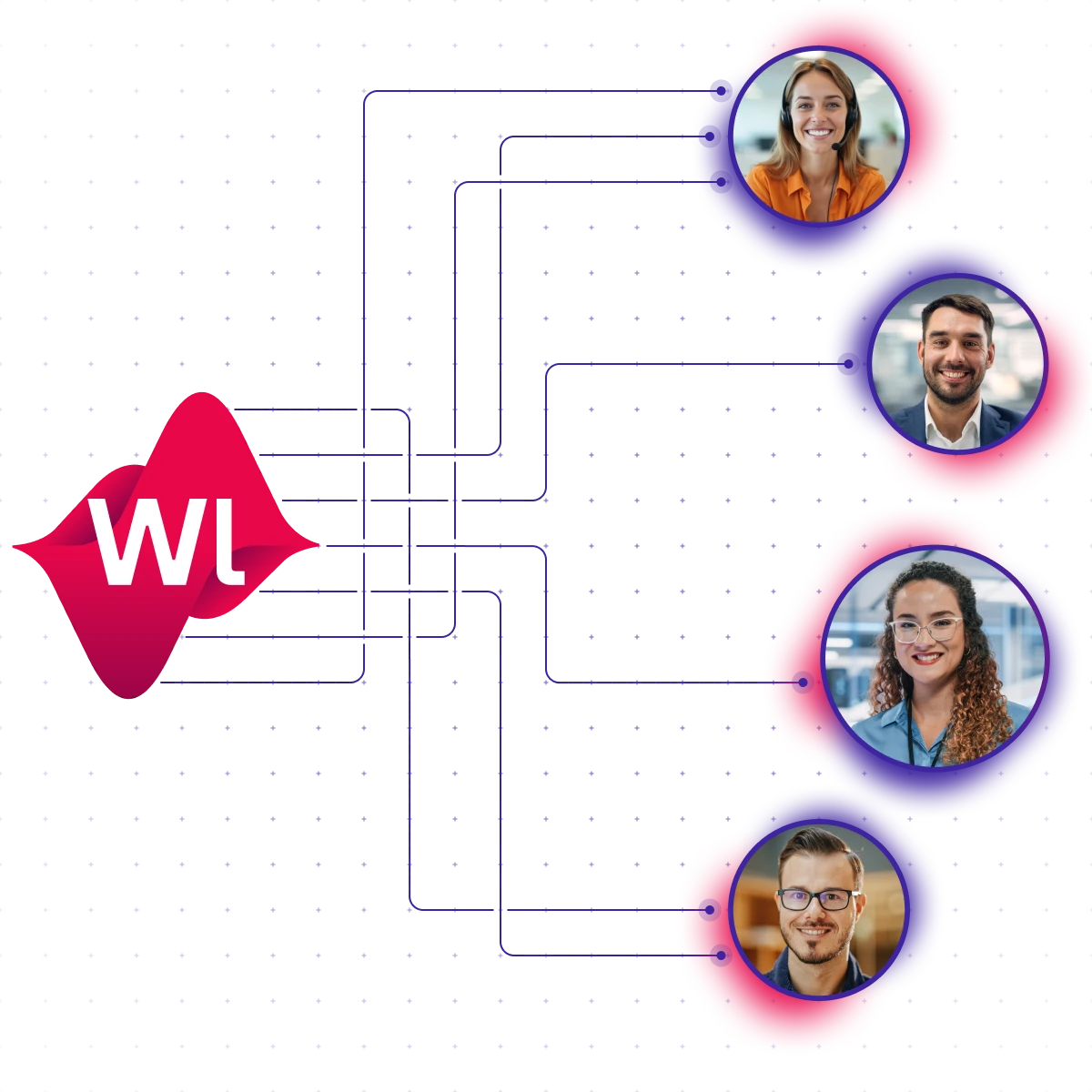
Each customer request is automatically assigned attributes, such as required skills and priority. Dynamic Workload then assigns the request to a qualified and available employee at the right time. This ensures that the task is completed reliably.
Optimal Workload in Teams
A Noticeable Workload Reduction For The Team
Foster better collaboration within your teams. With intelligent workload management, you can ensure that tasks are distributed evenly among team members. This reduces the workload on your employees and allows you to make effective use of the entire team’s capacity.

Case Owner
One Point Of Contact, From Start To Finish
Thanks to the case owner principle, every multi-step customer issue is handled by a dedicated contact person who oversees the entire process from start to finish. Having a personal contact person helps you build trust with your customers and enables your employees to see the direct impact their work has on customers. This helps them identify more strongly with their tasks and boosts their motivation.

IPD Sovereign Cloud
Secure, reliable, compliant
Dynamic Workload runs on the IPD Sovereign Cloud, which we developed in-house. As a full-stack solution, the platform offers complete independence from hyperscalers as well as full transparency. This allows us to ensure full data control, the highest level of security, and an infrastructure that meets all regulatory requirements.

Seamless Integration
Thanks to powerful API interfaces, Dynamic Workload adapts flexibly and seamlessly to your existing IT environment.












Use Cases
Dynamic Workload Solutions



Dynamic Workload live
Discover how you can optimize your customer service with the help of
state-of-the-art technologies and request a no-obligation live demo!
- Boost Your Efficiency
- Take the Pressure Off Your Employees
- Captivate Your Customers

FAQ
Frequently Asked Questions
Workload management in customer service means centrally capturing, prioritizing, and strategically distributing incoming tasks, inquiries, and processes to the right team members. This process takes factors such as urgency, service level agreements, expertise, availability, and current capacity into account. The goal is to manage workloads transparently, prevent backlogs, and ensure consistently high service quality. In this way, workload management helps companies handle customer requests more quickly, structurally, and efficiently.
Traditional task distribution and ticket routing often follow simple rules, such as the incoming channel, team assignment, or the order in which requests are received. Workload management, by contrast, looks at the entire workload of a service organization and dynamically distributes tasks based on various factors, including priority, skills, availability, and current capacity. This approach does more than just forward tickets; it provides intelligent support for operational decision-making. The result is optimal capacity utilization, efficient task processing, and greater transparency for management.
Workload management helps service organizations solve typical operational challenges: unevenly distributed workloads, growing backlogs, delayed processing times, and at-risk service level agreements. At the same time, it reduces the need for manual coordination. Employees benefit from a reduced burden as tasks are distributed in a more structured and appropriate manner. For customers, this means shorter wait times, qualified support, and an overall better service experience.
In workload management, tasks are distributed based on several parameters, including employee priority, skills, and availability. Additional, individual criteria can also be taken into account.
Dynamic Workload is provided via our proprietary IPD Sovereign Cloud. This full-stack solution was built from the ground up as a completely independent platform, designed for stability, compliance, and high availability. The Sovereign Cloud is 100% independent of hyperscalers and is operated exclusively in Germany.
Dynamic Workload is particularly well-suited for organizations with stringent regulatory requirements, such as insurance companies, public authorities, and other mission-critical service sectors. Within the IPD Sovereign Cloud, Dynamic Workload can be operated in a compliant and data-secure manner without the need for your own infrastructure—exclusively in German data centers and independent of hyperscalers. The cloud is aligned with requirements such as the EU AI Act, DORA, BaFin readiness, and BSI C5 criteria. Transparent contracts, clear processes, comprehensive auditability, proactive monitoring, and ISO 9001 and ISO 27001 certified management systems support secure and compliant operations.