
Dr. Moritz Liebeknecht
IP Dynamics GmbH
Billstraße 103
D-20539 Hamburg
“No one should be without shelter and shelter after a disaster”
As part of the annual Christmas campaign “Donate instead of give”, IP Dynamics decided this year to support the work of the non-profit organization ShelterBox.

There are disasters such as earthquakes, droughts, floods, hurricanes or violent conflicts and wars all over the world on an almost daily basis. As a result of such natural disasters or human-induced crises, the lives of countless people are severely affected or even completely destroyed. Those affected lose their homes and need support to rebuild their livelihoods. However, many crises and disasters are barely known to the public. They are often overshadowed by other global issues.
Global humanitarian aid
ShelterBox is an international, non-profit organization. Their goal is to support people all over the world who have lost their homes due to natural disasters, violent conflicts or wars. The organization's vision: “No one should be without shelter and shelter after a disaster.”
ShelterBox is headquartered in Cornwall (Great Britain). In addition, there are 13 country offices, for example in the USA, Canada and Germany, as well as warehouse locations spread around the world, where relief supplies worth six million euros can immediately be used in disaster areas. Since its founding in 2000, the organization has provided relief supplies to more than three million people in over 100 countries, particularly in regions severely affected by disasters outside Germany. More than 40 percent of those affected are children. In addition, there are particularly vulnerable groups such as women, the elderly, the sick and the disabled, who receive priority assistance.
Requirements for use
ShelterBox requires an operational authority in order to be able to provide assistance in affected countries. To do this, the affected country must ask for international assistance. The organization itself is guided by its own set of operational criteria and the United Nations (UN) coordinates almost all humanitarian operations via the so-called Humanitarian Cluster System. This system ensures that each aid organization is deployed according to its strengths. ShelterBox is one of the few organizations that specialize specifically in providing emergency shelter.
Preparing for an assignment is crucial. With the help of modern monitoring systems and forecasts, ShelterBox can estimate in advance when and where, for example, a hurricane or other disaster will occur, how many people will be affected and what relief supplies are needed. The basis for this is, among other things, the Global Development Index.
Giving people shelter
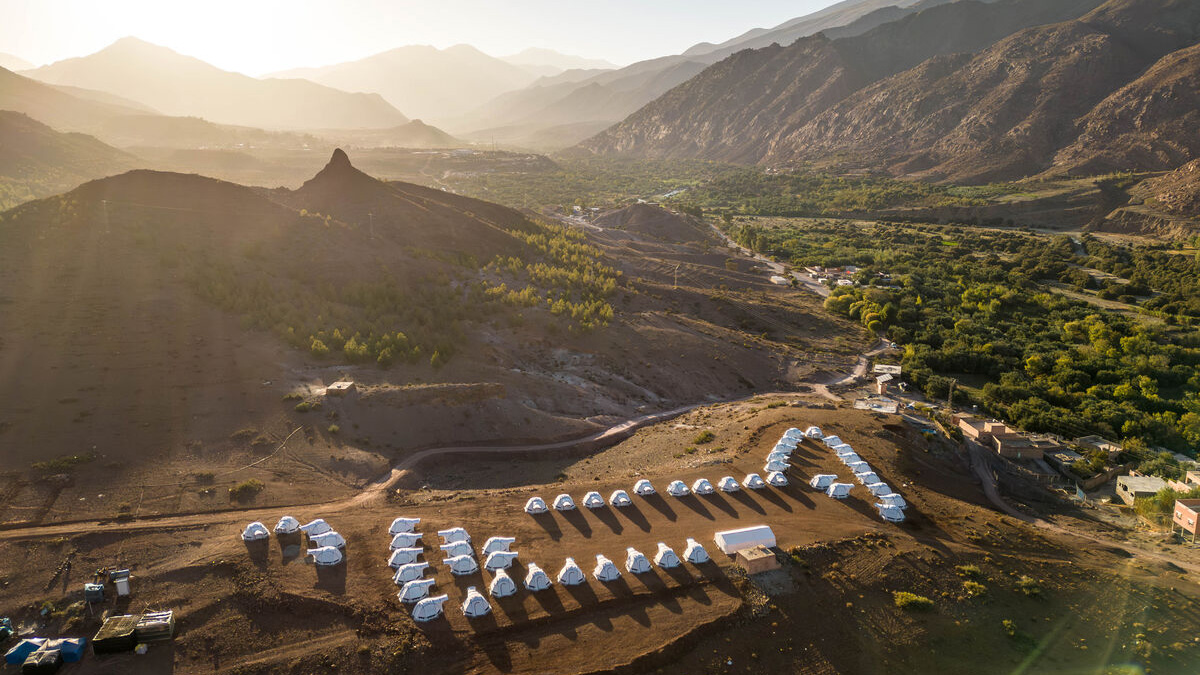
In an emergency, ShelterBox provides emergency accommodation, vital supplies and training. The aid is individually adapted to the respective disaster and to the needs of the people, as each mission has different requirements. Relief supplies include tents, shelter kits with tarps and tools, solar lamps, blankets, mattresses, water filters, cooking utensils and mosquito nets.
Ideally, this basic equipment allows those affected to stay close to their destroyed homes and start rebuilding. At the same time, this reduces the burden on public emergency shelters such as schools or gyms, which ensures access to education and sports facilities.
One example of the financial outlay is the procurement of relief supplies. A thermal blanket costs around seven euros, while a water filter costs around 70 euros and an emergency aid tent for an entire family costs 480 euros. The most complex transport and handling costs are already included in the costs. “A mosquito net, which means protection for an entire family, costs less than a cappuccino in Berlin-Mitte, namely 4 euros,” says Annette Rost, managing director of ShelterBox Germany e.V.
The people behind the aid
ShelterBox employs permanent employees who are supported by numerous volunteers all over the world. Volunteers volunteer in addition to work and family. Volunteers are also part of the teams when deployed in disaster areas. Several complex training courses are required to become part of the operational team.
In crisis areas, teams of three usually work on site for around three weeks. During longer assignments, teams are replaced or strengthened. Volunteers also support work in the country offices, for example by providing support in the areas of graphics, marketing or legal expertise. Many country offices, such as ShelterBox Italy, the Netherlands, Australia and Finland, are organized purely on a voluntary basis.
World-wide collaboration
ShelterBox works with various organizations around the world. From local partners in the countries of operation to UN agencies and the International Federation of Red Cross and Red Crescent Societies. Through these collaborations, ShelterBox can help faster and more effectively. Working with others strengthens work in many ways. Annette Rost explains: “We can reach more people in hard-to-reach places, such as in Gaza. We can commit ourselves to long-term support without setting up our own local offices. We learn from local partners and use our resources effectively.”
Rotary is also a partner organization. Rotary shares ShelterBox's core values: “We help others, promote integrity, and are committed to global understanding, goodwill, and peace. ”
Current deployments
ShelterBox is currently active in 13 countries. Including in Jamaica after Hurricane Melissa, in the Philippines after several typhoons and earthquakes, in Myanmar after an earthquake, in Somalia during conflict and drought, and in Afghanistan and Gaza.
IP Dynamics supports ShelterBox's valuable work and would therefore like to make a contribution to alleviating the suffering of affected people in these crisis regions.